
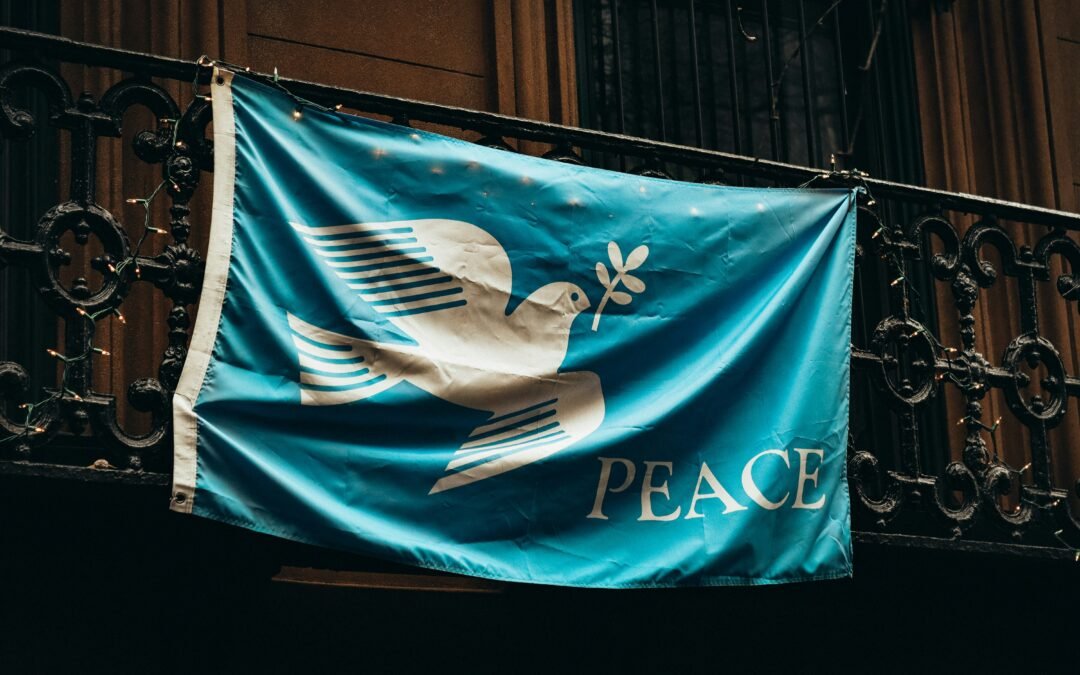
As the world reels under the shadow of war and man-made destruction, death looms large in the eyes of innocent victims. Cries for peace go unheard, as the perpetrators of war carry on their jingoistic mission with aplomb, ruthless missile attacks, bombing and heinous violence. Humanitarian values go for a toss, as the only objective of war-mongering nations remains the annihilation and subjugation of rivals, in a bid to establish superiority.
What is it that turns the men in power and authority into barbaric rulers? Is it merely greed to annexe more territory and reign supreme? Can we dig deeper into the psyche behind such dictatorial motives?
More often than not, one suffers from an inner conflict, to which he may be oblivious, which steadily becomes a reflection of his actions. This conflict can stem from an inadequacy that one feels, and the constant need for approval of self-worth, resulting in narcissistic tendencies. It may also result from a persecution mania, where the person involved constantly views the world through the eyes of a victim. Deep-seated psychological traits are often manifested as behavioural anomalies, where an individual makes decisions to wreak havoc on civilisation.
World peace through meditation is a movement aimed at creating global harmony, by cultivating inner peace in individuals, which then flows outwards. It is believed that collective, focused meditation can lower the inclination of violence, fostering feelings of empathy and unity in society. The foundation of this idea is derived from the studied fact that personal tranquility helps to dispel the roots of violent behaviour. When practised in a group, it helps to create a more peaceful environment.
Through a positive collective consciousness, it may be possible to target negative influences such as terrorism and crime, creating space for saner thoughts. Events like those on World Meditation Day, help to achieve this endeavour by creating a global wave of calm. The techniques involved in the meditative process focus on controlled breathing, collective chanting of hymns, which leads to compassion and connectivity among the participants.
Prominent spiritual figures have stressed that world peace can be attained by finding peace within, promoting a ‘world family’ based on inner stillness. Some forms of meditation even claim to turn aggression into compassion, thus harbouring positivity.
Thus, the role of meditation in promoting international peace and unity cannot be undermined, and may be the need of the hour. While individual forms of meditation have widely been acclaimed as transformative, collective meditation can definitely be a wellspring in the synthesis of world harmony and peace.